Laucirin
Laucirin
- Protected lauric acid to maintain the balance of the gut microbiota
Gut health depends on the interaction between diet, the integrity of the mucosa and the balance of the gut flora: a stable gut microbiota aids digestion and nutrient absorption, reduces the incidence of gut diseases and promotes an effective immune response. Gram-positive bacteria, such as streptococci, staphylococci and clostridia, cause considerable damage to animal health and significant financial losses for the farmer. Streptococcus suis is transmitted by direct contact or spread indirectly via airborne droplets expelled during breathing. Healthy pigs can harbour the microorganism in their tonsils for several months, and sows can act as healthy carriers. The sow passes antibodies to the piglet via colostrum, which is why the disease is rare in suckling animals. The disease is very common in the early post-weaning period, often appearing 2–3 weeks after weaning and continuing until around 16 weeks of age. At weaning, almost 100 per cent of piglets become carriers within three weeks.
Streptococcus infection: economic damages
- high mortality | 10-50%
- high morbility | 5-20%
- less average daily growth |-20/40 g/die
- feed consumption reduction |-20-50%
- feed conversion reduced |+20-40%
- production loss days |+8-15 gg
- drugs cost increased |+1-5 €/pig
- increase general costs of work
Possible workers contagion
Gram


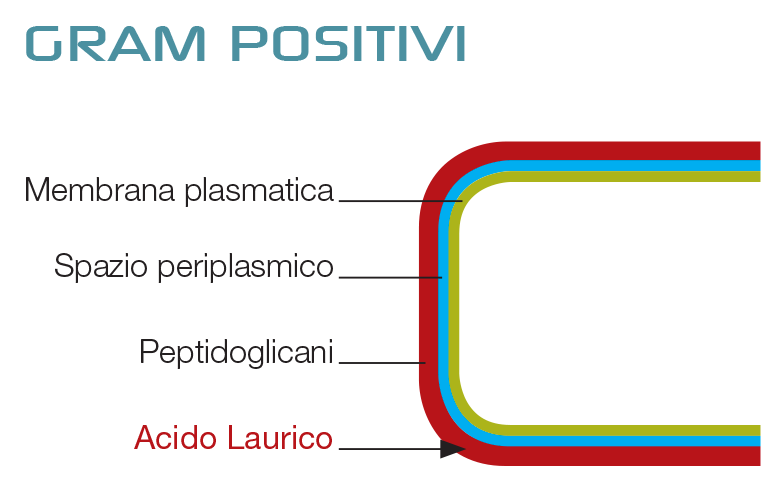
Gram+ bacteria cellwall is (50-90%) constituted by peptidoglycans, while Gram- have an additional polysaccharidic membrane (not present in Gram+) and a thin peptidoglycan membrane.
Among all medium chain saturated fatty acids, Lauric acid is the one having strongest antimicrobial activity against gram-positive bacteria and against some viruses and fungi.
Lauric acid is able to interpose with the peptidoglycan cell wall causing its own breaks: once inside the cell, Lauric acid may also interfere with the bacterial gene transduction and transcription processes.
Economic considerations
When utilize Lauricin
- To reduce the incidence of Streptococcus-related problems
- To prevent post-weaning diarrhoea
- During the transition between feeds of different quality
- In situations of heat stress or feed restriction
- To improve general health
Fill the form for any informations, we will reply to you as soon as possible